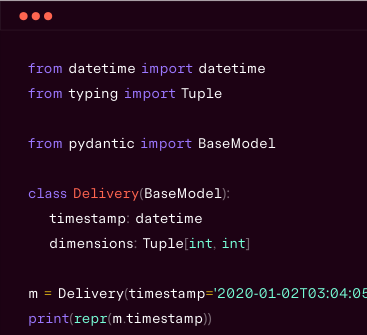
Learn how Vstorm uses Pydantic AI to power Synera's text-to-workflow agent, converting natural language prompts into complex engineering workflows in minutes.

Engineering
From text prompts to engineering workflows in minutes
Synera, an AI agent platform for engineering that integrates with popular CAD, CAE and PLM software, built a text-to-workflow Agentic AI system using Pydantic AI that converts natural language prompts into executable workflows, cutting design time from hours to minutes.
“With our current version of text-to-workflow agent, it takes about 2 minutes to write a text prompt and I can create a workflow that would take me up to an hour to put together.”— Andrew Sartorelli, Head of Product Management, Synera
Products Used:
Pydantic AI
4 mins
Related case studies
View all case studies
Dosu cut agent debugging time 90% and saved $30k a year with Pydantic Logfire
See how Dosu debugs its AI agents without leaving the coding agent→
Logfire and Pydantic Evals give Evergreen.ai end-to-end observability and continuous evaluation for financial-services AI agents.
See how Evergreen.ai runs observable financial-services AI agents→
Explore Logfire
Explore our open source packages